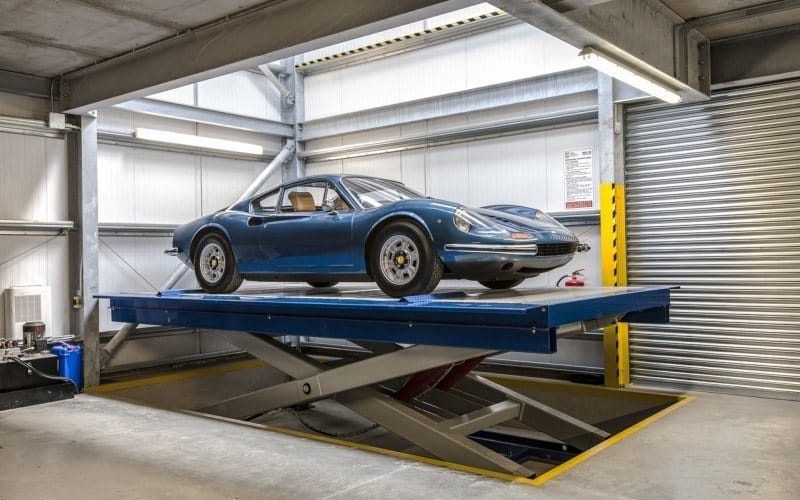
The luxury of parked vehicles inside a private home adds immense value and comfort to daily routines. While traditional garages occupy significant space, a car lift for villas solves this problem by moving your precious automotive collection between floors safely.
These systems provide a way to store cars while keeping them hidden from outside view. Reliable safety tech ensures every movement remains smooth, stable, and completely secure for everyone.
Weight sensors and overload protection:
Safety begins with knowing exactly how much weight the platform can carry. Every lift comes with a specific limit that must never be exceeded to prevent mechanical strain. Modern systems use sensitive scales that detect if a vehicle is too heavy before the motor even starts. If the sensors find an overload, the system stays still and alerts the user immediately. Installing a car lift for villas Abu Dhabi with this feature prevents damage to the cables and keeps the structural integrity of the home intact.
Emergency braking systems:
Mechanical failures are rare but having a backup plan is vital for peace of mind. Emergency brakes act as a physical safety net that locks the platform in place if a cable snaps or loses tension. These brakes work using gravity and friction to grip the guide rails instantly. This ensures the platform never drops unexpectedly, protecting both the car and the building foundation. It is the most critical hardware component for any residential lifting system.
Infrared motion detectors:
Moving parts can be dangerous if a person or a pet wanders into the path of the lift. Infrared sensors create an invisible curtain around the moving platform to watch for any movement. If anything breaks this light beam, the lift stops moving within a fraction of a second. This prevents accidents during the transition between levels. These sensors are usually placed at the top and bottom entry points to catch any potential hazards before they cause trouble.
Manual override controls:
Power cuts can happen at any time, but they should never leave a vehicle stuck between floors. A manual override allows homeowners to lower the platform slowly using a hand pump or a secondary battery system. This ensures you can always access your car even during a total electrical failure. Having a simple way to control the machine manually removes the fear of being trapped. It provides a reliable exit strategy for the vehicle in every possible scenario.